Jewish Theocracy
Government ruled by the Torah and halakha, with rabbinical courts, judges or kings under religious authority, Judaism as the state religion and rejection of assimilation, inspired by the biblical kingdoms of Israel and Judah.
Home / Ideologies / Jewish Theocracy
Government ruled by the Torah and halakha, with rabbinical courts, judges or kings under religious authority, Judaism as the state religion and rejection of assimilation, inspired by the biblical kingdoms of Israel and Judah.
In one sentence
I want a state ruled by the Torah and halakha, with rabbinical courts, judges or a king under God's law, and family landholdings.
Political axes
Leans further toward religious than 98% of the 248 ideologies in the catalog.
Of all the axes, Religion is where it stands furthest from the rest.
On Intervention, it sits practically at the catalog median.
Here it shares common ground with most ideologies.
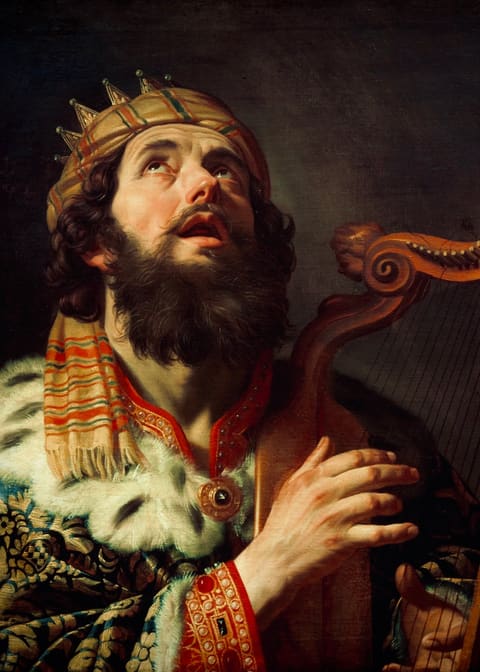
According to the Bible, David united the tribes of Israel, conquered Jerusalem and made it his capital, defeated the Philistines, brought the Ark to the city and built a centralized kingdom, and tradition attributes the Psalms to him and the line of the Messiah.
Closest, by dimension
Other compatible profiles
The most distant
Reference country
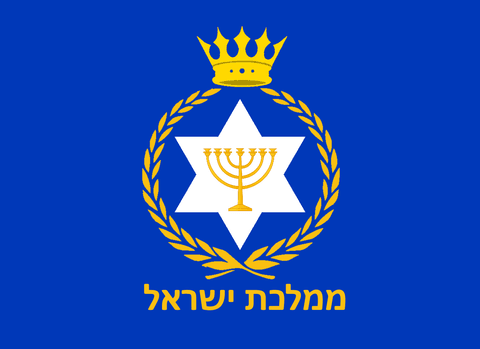
A monarchy uniting the Hebrew tribes under Saul, David and Solomon, the Kingdom of Israel concentrated power in a king anointed by a prophet, with Jerusalem and the Temple as its religious center, the law of the Torah, tribal levies and expansion over its neighbors.
Other close countries
An Islamic emirate ruled by the Taliban since 2021, Afghanistan is governed by a clerical supreme leader who imposes a strict interpretation of sharia, bars women from education and work, and faces economic crisis and isolation.
Also close, by dimension
The most distant
A monarchy uniting the Hebrew tribes under Saul, David and Solomon, the Kingdom of Israel concentrated power in a king anointed by a prophet, with Jerusalem and the Temple as its religious center, the law of the Torah, tribal levies and expansion over its neighbors.
Also close, by dimension
The most distant
Ideological proximity
Closest within Far-Right
Ideology advocating the political unity of Muslims above national borders, around the ummah and the ideal of a caliphate, formulated by Jamal al-Din al-Afghani and adopted by Ottoman sultan Abdul Hamid II against European colonialism.
Christian theocratist doctrine that subordinates political power to religious authority, holding that divine law and the Church should govern the state and customs, from medieval and papal ultramontanism to modern reconstructionist projects.
A neoreactionary current combining the thought of Thomas Aquinas with criticism of liberal democracy, egalitarianism, and progressivism. It grounds a hierarchical, traditional political order in natural law, objective morality, reason, and the common good, allowing for sovereign monarchical or centralized authority.
Closest in other spectrums
A current fusing ethnic identity and Theravada Buddhist faith, seeing the nation as guardian of the Dharma threatened by minorities, as in Sinhalese nationalism in Sri Lanka and the Ma Ba Tha and 969 monk movements in Myanmar.
Current that mobilizes the people against political and cultural elites, combining nationalism, immigration restriction, traditional values, public religion, strong security, and anti-establishment economic pragmatism around personalist leaders.
Model that organizes society into corporations of workers and employers integrated into the state, seeking harmony between classes and directed economic cooperation instead of conflict or free competition.
The most distant ideology
Crypto-AnarchismLibertarian22%